Introducing Oslo
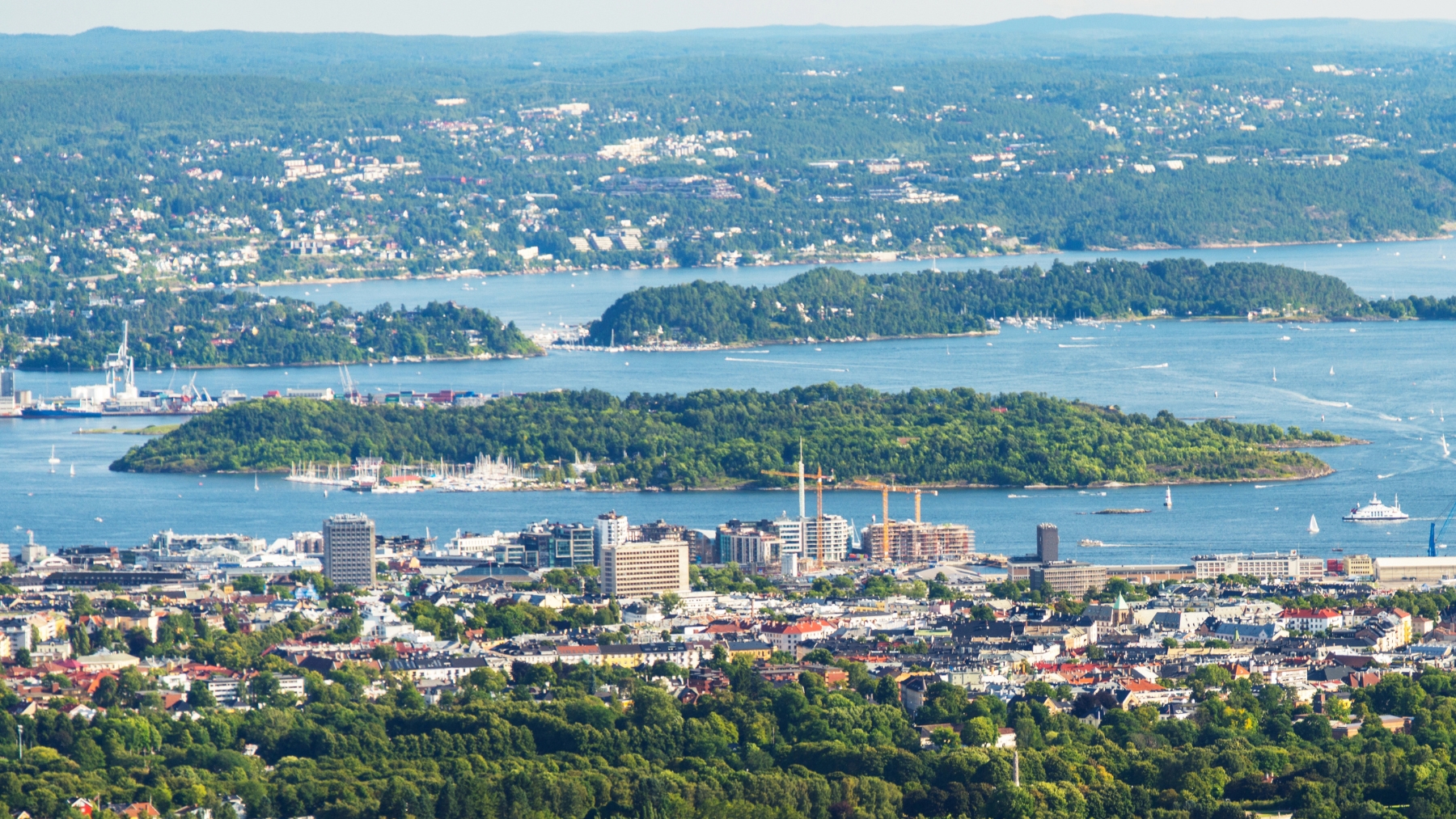
Although it has carried different names throughout its history, Oslo, Norway’s capital, sits at the head of the Oslofjord, framed by forest on all sides. It has grown from its Viking foundations into one of Europe’s most modern capitals, shaped as much by its natural setting as by its architecture. As the seat of the Norwegian government and home to the Royal Norwegian House, it remains central to the country’s identity, and is known globally as the city where the Nobel Peace Prize is awarded each year.
What defines Oslo now, however, is the balance it has found. History sits comfortably alongside the modern, and the country’s significant wealth, driven in large part by North Sea oil, is matched by a clear ambition to lead in sustainability. It is one of the greenest capital cities in Europe, not in how it presents itself, but in how it functions day to day.
Arriving into the city reinforces that immediately. Whether coming through Oslo Airport to the north, or approaching along the fjord, the transition is smooth and uncomplicated. The city itself is compact, easy to move through, and never feels crowded. Public transport is efficient and well integrated, and bikes are widely available, used naturally across the city rather than as a novelty. As a base for golf, that matters. Within a relatively short distance of the centre, a number of high-quality courses are set into the landscape in different ways, shaped by forest, rock, and water. Much like Copenhagen, the strength of Oslo is not in scale, but in how easily everything fits together, allowing you to build a trip that feels balanced without becoming complicated.
The Golf Around Oslo
Golf around Oslo is defined less by volume and more by a small group of courses that offer distinct and contrasting tests within a relatively compact area. You are not dealing with long transfers or needing to stretch the schedule to make the trip work. Instead, the strength here is in how clearly each course presents a different challenge, allowing you to build a sequence of rounds that feel varied without becoming complicated.
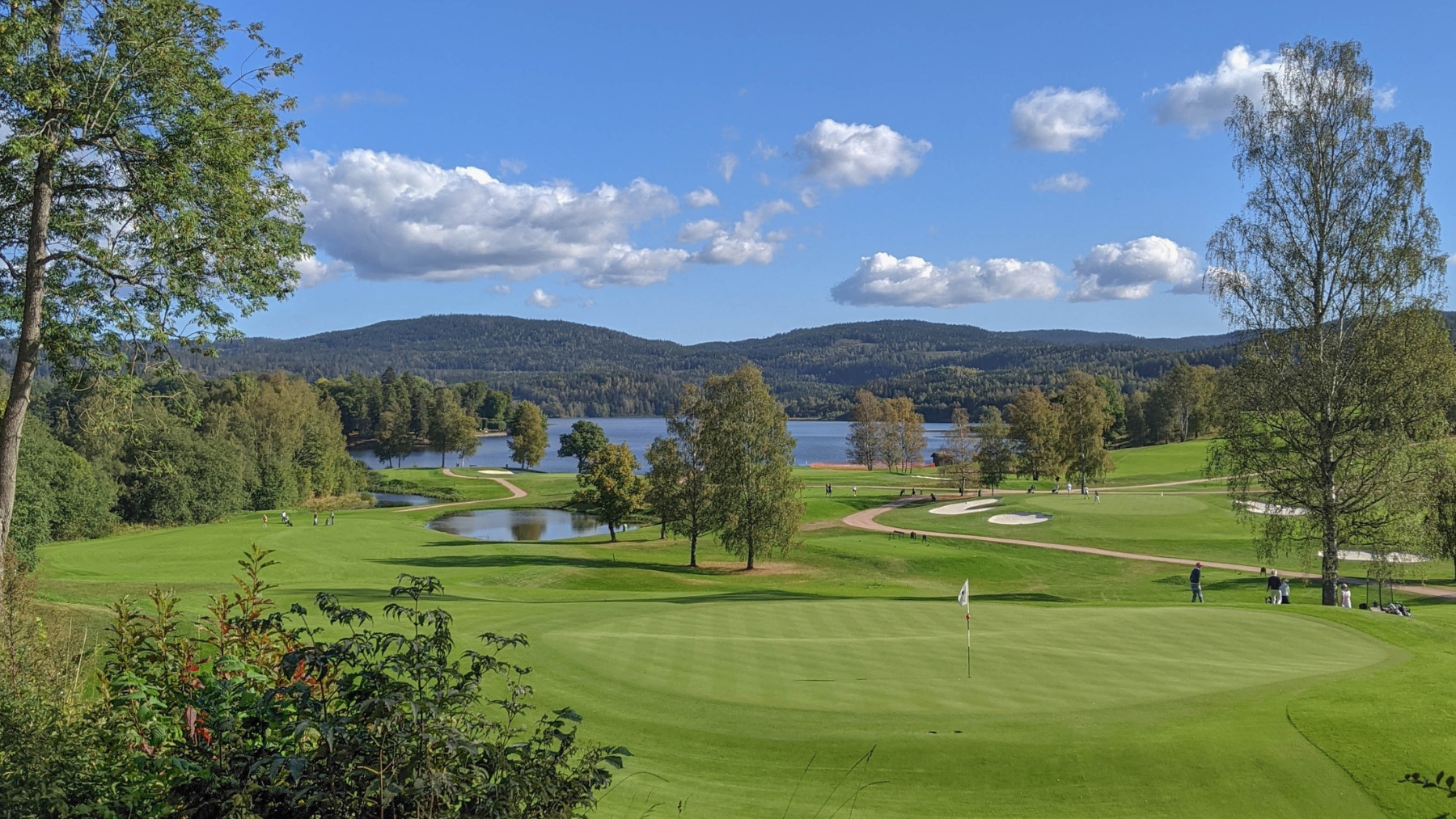
At the centre of that sits Oslo Golf Club. As the country’s most established and recognisable course, it carries a certain weight, but the strength of the layout is in how it plays rather than its reputation alone. Set into a relatively tight piece of land and built around Lake Bogstad, which defines much of the routing and provides a constant visual presence throughout the round, the course places a clear emphasis on positioning from the tee. Fairways are defined, and while there is room in places, the angles into the greens quickly dictate how aggressive you can be. Approach play becomes the key to scoring, particularly on holes where the water influences both line and club selection. The greens are well protected without being over-designed, requiring control of distance more than creativity. It is a course that rewards discipline and familiarity, and one that sets a strong baseline for the rest of the golf in the area.
A short drive out of the city, Losby Golf Club offers a different scale and feel. Set across a larger property, the course moves through forest and more open ground, creating a round that feels more varied from hole to hole. From the tee, there is often a clearer line to follow, but the challenge builds through the second shot. Approaches tend to be longer, and positioning into the greens becomes more demanding, particularly where subtle changes in elevation influence both club selection and shot shape. The overall presentation is strong, and it provides a more complete, balanced test that contrasts well with the tighter structure of Oslo Golf Club.
Haga Golf Club sits closer to the city again, but introduces a slightly different type of challenge. With two courses on site, it offers flexibility, but the common theme across both is a more rugged, exposed feel. The layouts bring wind into play more regularly, and from the tee the preferred line is often clear but not always comfortable. Miss in the wrong place and the next shot becomes significantly more difficult, particularly around the greens where positioning is critical. There is a clear premium on course management throughout, with the best scoring coming from placing the ball in the right areas rather than forcing shots that are not there.
Bærum Golf Club completes the group and brings a slightly more understated feel. It does not rely on scale or standout features, but instead on how consistently it asks questions throughout the round. From the tee, positioning remains important, but there is generally more room to work with, allowing for a slightly more relaxed start to each hole. The challenge builds gradually, with approach play again becoming the deciding factor. Greens are varied without being severe, placing an emphasis on controlling distance and holding the correct sections rather than relying on recovery. It may appear more straightforward at first glance, but rewards solid, repeatable golf over time.
Taken together, these courses define golf around Oslo. There is no single dominant style, but rather a group of layouts that complement each other, each placing emphasis on a different part of the game. Distances are manageable, transitions are straightforward, and the variety across the courses allows you to build a trip that feels considered without becoming overly complex.
Where To Stay
Where you choose to stay in Oslo will shape the feel of the trip, but as with Copenhagen, a central base tends to work best. The city is compact and easy to move through, and staying in the centre allows you to balance early rounds with time in the city without needing to plan too heavily around logistics. Much of Oslo’s character sits along the waterfront and in the areas immediately surrounding it, and basing yourself here keeps everything within easy reach.
At the higher end, hotels such as Hotel Continental and The Thief offer a level of quality that reflects the city itself. Both are well positioned, with The Thief sitting out in Tjuvholmen with direct access to the waterfront, while Hotel Continental places you more centrally, within walking distance of much of the city. They provide a comfortable, well-considered base without feeling overdone, and work well if you want the stay to feel like part of the experience rather than simply somewhere to sleep.
For something slightly more understated, but still high quality, options like Amerikalinjen or Sommerro offer a different balance. Both have a strong identity, but remain relaxed in how they present themselves. They sit in areas that are easy to move in and out of, and work particularly well if you want to be central without pushing fully into the highest price bracket.
If the focus is more on value, Oslo still offers solid options without needing to compromise too much on location. Hotels such as Citybox Oslo or Smarthotel provide simpler setups, but remain clean, efficient, and well placed. They are practical choices, but still allow you to experience the city properly.
For groups, longer stays, or those looking for more flexibility, apartment rentals through platforms like Airbnb are widely available across the city. Areas such as Frogner, Grünerløkka, or Majorstuen each offer slightly different perspectives on Oslo, from more residential to more active neighbourhoods, while still remaining close enough to the centre to move around easily.
There is also the option to stay slightly outside the centre, particularly if you want quicker access to certain courses. Areas to the west of the city bring you closer to Oslo Golf Club and Bærum, and can make early starts more straightforward. It shifts the balance slightly towards the golf, but distances remain manageable.
As with Copenhagen, there is no single correct choice. The strength lies in how easily the different options work together, allowing you to shape the trip around how you want it to feel rather than being forced into one approach.
Out and About in Oslo
Time in Oslo between rounds tends to settle into a natural rhythm without needing much structure. The city is compact, well connected, and never feels overwhelming, which means you can move through it easily without planning too far ahead.
Much of that centres around the water. The harbour area and Oslofjord shape how the city feels, whether you are walking along the waterfront paths, moving between districts, or taking one of the short ferry crossings out into the fjord. The islands just beyond the city offer a different perspective again, and even a short trip out gives a clearer sense of how closely Oslo is tied to its surroundings.
Away from the water, Oslo has enough cultural weight to justify stepping away from the golf for a few hours. The Opera House is the most obvious example, not just as a building but as a space that people actually use, walking across its roof and out towards the fjord. Nearby, the MUNCH museum and the National Museum provide a broader view of Norwegian art and history without feeling heavy or overly formal. For something more relaxed, Vigeland Park within Frogner Park combines open space with sculpture in a way that feels part of the city rather than separate from it.
Food and coffee fit naturally into the day. Oslo has developed a strong food scene, but much like Copenhagen, the enjoyment often comes from places that are well executed rather than overly ambitious. Restaurants such as Maaemo sit at the highest end if you want that experience, but there is just as much to be found in simpler settings across the city. Coffee is a consistent part of the rhythm, and places like Tim Wendelboe or Fuglen are the kind of spots you return to without thinking too much about it.
If you have the time, heading up into the surrounding forest areas gives another side to Oslo that is easy to overlook. Within a short distance of the centre, you are into proper woodland, with trails, lakes, and a sense of space that feels much further removed than it actually is.
Beyond that, there is no need to complicate things. Oslo works best when you keep it simple, letting the golf shape the structure of the trip and using the city to fill the spaces around it.
Trip Logistics
A trip to Oslo works well over two or three days, with enough flexibility to extend if you want to explore further. If you are arriving via Oslo Airport, the transfer into the city is straightforward, and an afternoon round on the day of arrival is realistic, particularly at courses such as Oslo Golf Club or Bærum, both of which sit within easy reach of the centre. The airport lies to the north of the city, and with the main routes running cleanly into Oslo, you can move from arrival to the course without needing to build in too much extra time. Car hire is the most practical way to structure the trip. While public transport within Oslo is excellent, the courses sit in different directions around the city, and having your own transport allows you to move between them easily and set your tee times without compromise.
The second day is where the trip tends to settle into its rhythm. An earlier start at Losby or Haga allows you to experience a different type of golf before heading back into the city for the afternoon and evening. That balance between golf and time in Oslo is one of the strengths of the destination, and it is worth keeping space in the day rather than trying to overfill it. If you have a third day, it is worth using it to complete the set with a course that contrasts with what you have already played, before returning comfortably towards the airport.
Final Thoughts
Oslo is not a destination built around scale. It does not have the volume of courses of Stockholm, or the immediate recognition of some of the more established European golf destinations, but instead offers a more measured, high-quality experience where the golf and the city sit naturally alongside each other. The courses provide clear variety without feeling disconnected, and over a short trip you move through different types of tests rather than repeating the same round.
It may not be the most obvious first choice in the Nordic region, but it is a strong one, whether as part of a wider itinerary or as a destination in its own right. It is, ultimately, a place where the details matter, and where the golf, the city, and the surrounding landscape align in a way that feels natural rather than constructed.