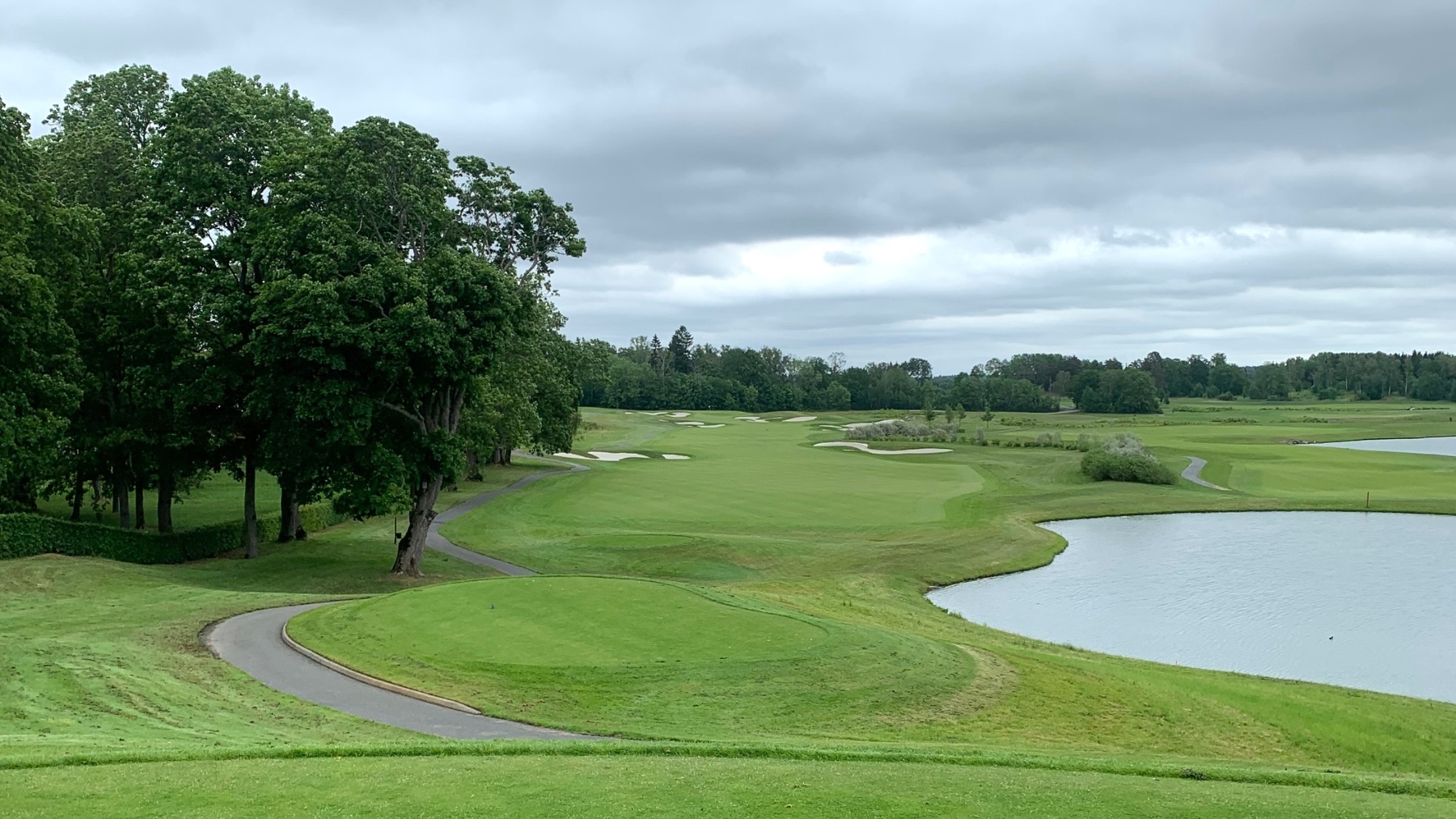
Bro Hof Slott sits just outside Stockholm, on the edge of Lake Mälaren, and from the moment you arrive it is clear that this is not trying to be a typical Swedish golf club. The scale is different, the shaping is deliberate, and the entire place feels like it has been designed with a clear purpose rather than allowed to evolve over time. The Stadium Course opened in 2007, designed by Robert Trent Jones Jr. with Bruce Charlton, and it was built to host tournament golf, which has pretty much defined it ever since. That shows up most obviously through its period as host of the Scandinavian Masters, but also in the way the course presents itself day to day. This is not subtle golf, it is direct, modern and unapologetically engineered.
Unlike many Swedish courses that feel rooted in forest or gently rolling inland terrain, Bro Hof is open and exposed, with fairways cut wide into the landscape, large bodies of water introduced and positioned with intent, and the whole layout sitting in clear view of the lake. It is visually striking, but it also removes any sense of hiding from the challenge. You can see what is coming, and that tends to make it more uncomfortable rather than less.
What to Expect From The Golf
From a golfing perspective, the Stadium Course is long, but more importantly it is relentless in how it applies pressure. From the championship tees it stretches beyond 7,300 metres, placing it among the longest courses in Europe, but even from the more commonly used tees, the sense of scale remains and the questions it asks don’t really change, only the distances do.
Water defines the round. It is in play on a large number of holes and, unlike courses where it sits off to the side as something you can largely ignore, here it regularly dictates how holes are played. It shapes lines from the tee, it controls approaches, and it becomes more and more present as the round develops. The 15th is a good example of this, a long par five running alongside Lake Mälaren where the temptation to push forward is always there, but the margin for error is narrow enough that a poor decision quickly turns into a dropped shot.
The 17th is the hole that most people talk about, and it earns that. It is a short par three played to an island green, and while the comparison to Sawgrass is obvious, it is not just a visual copy. The green is fully exposed, the carry is complete, and there is no comfortable way to play it. The yardage is not long, but that almost makes it worse. Into the wind it becomes demanding, downwind it becomes awkward, and late in the round, with the clubhouse and terrace directly behind, it has a habit of getting into your head more than it should. It is one of those holes where you know exactly what you need to do, and that doesn’t make it any easier.
The 18th finishes things properly, a long par four back towards the clubhouse with water again influencing the line, and it is the kind of hole that makes sense on a course built for tournament golf. You need two committed swings to give yourself a chance of making par, anything less tends to get exposed.
Across the rest of the round, the pattern is consistent. Fairways can appear generous, but positioning matters, and being on the wrong side changes the angle in a way that usually brings more trouble into play rather than less. The greens are large, well conditioned and subtly contoured, but they are at their best when approached from the positions the course asks for, not the ones you happen to find.
Conditioning & Presentation
Conditioning at Bro Hof is consistently at a very high level, and it has to be. A course built on this scale, with this level of shaping and water, relies on clean presentation to work properly. Fairways are typically immaculate, greens are fast and true, and the overall visual clarity of the course is one of its defining features. What stands out most is the contrast, the maintained surfaces sitting sharply against the water and surrounding rough, giving the course a very distinct look. On a clear day, with light coming off Lake Mälaren, it is one of the more visually striking courses in Sweden, but it is a different kind of beauty to the quieter, more natural courses elsewhere in the region. This is controlled, deliberate and precise, and that will appeal to some more than others. Wind off the lake can play a part, but it is not the defining challenge. The course is difficult because of how it is designed, not because of external conditions.
Club & Experience
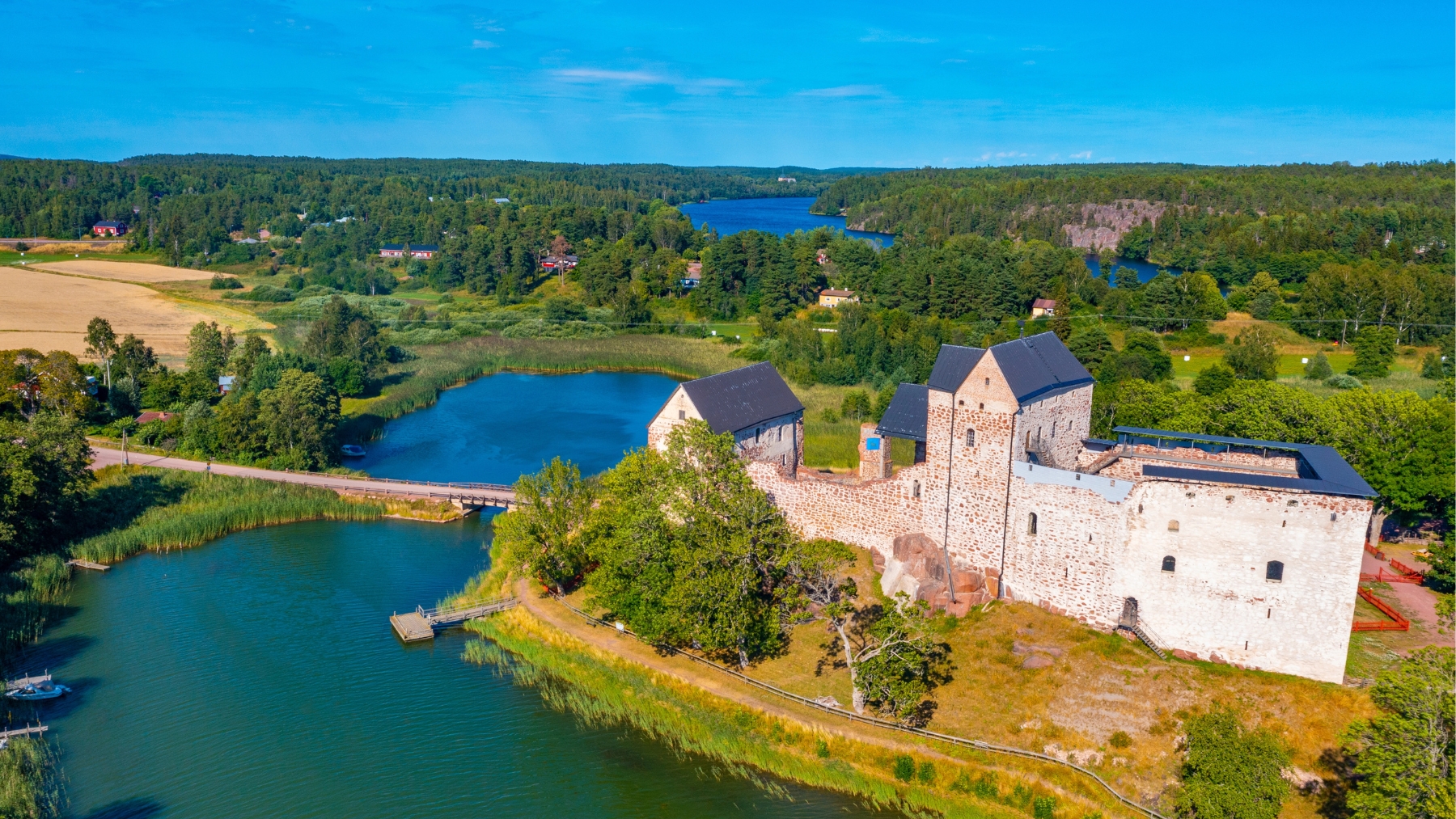
The club side of Bro Hof is premium in the proper sense of the word. From the moment you come through the gates and the castle comes into view, there is a shift in tone. You are not just arriving at a golf club, you are arriving somewhere that has been designed to feel significant. It is subtle, but it is there, and it carries through the entire experience. The setting does a lot of the work. The presence of Bro Hof Slott gives the whole place a level that very few golf clubs in Sweden can match. This is not a functional clubhouse attached to a good course. It is a full estate setting, and the golf sits within that rather than the other way around. The practice facilities are extensive and of a very high standard, but more importantly, everything feels considered. There is no sense of compromise anywhere.
What stands out most is how you are treated as a guest. It is not overplayed, and it is not forced, but there is a clear effort to make the experience feel personal. You are not processed through the system in the way you can be at some high-end clubs. Instead, there is a sense that your round matters, and that carries through from arrival to departure. The restaurant is a big part of that. This is not golf club food with better presentation, it is a genuinely high-quality restaurant that would stand on its own. The setting, the food and the overall feel all match the standard of the course, and it becomes part of the day rather than something you do afterwards. Despite all of this, it does not tip into being uncomfortable. It is more formal than most Swedish clubs, but it still feels relaxed enough to sit naturally alongside the golf. That balance is what makes it work. It feels premium, but it still feels like a place you want to spend time.
Where It Fits
Within Swedish golf, the Stadium Course at Bro Hof sits firmly at the top end of the spectrum. It is one of the few courses in the country that can genuinely be described as a destination in its own right, and for anyone travelling into Stockholm with golf in mind it is very difficult to ignore.
It also plays an important role in the wider Stockholm golf scene, where many courses are more traditional, tree-lined and understated. Bro Hof offers something very different, feeling closer to a modern international championship venue than a typical Nordic club, and that contrast is part of what makes golf in the area so strong.
Final Thoughts
The Stadium Course at Bro Hof Slott is not subtle, and it is not trying to be. It is a modern, purpose-built championship course, and everything about it reflects that. The length, the use of water, and the overall scale combine to create a layout that is demanding, consistent and difficult to ignore.
The 17th will stay with most people, but it is not the only reason to play it. The strength of the course lies in how it builds pressure across the entire round and then finishes with a stretch of holes that feel exactly as they should on a course of this level.
It is not a course that everyone will love in the same way they might love a quieter, more natural layout, but that is not really the point. Bro Hof Stadium Course is built to test, to be seen, and to hold its place at the top end of Nordic golf, and on those terms, it succeeds.