Introducing Åland
Set between Sweden and Finland, out in the Baltic Sea, the Åland Islands sit slightly apart from both, and that separation defines how they feel. Although part of Finland, the islands are Swedish-speaking, and much of the character reflects that, from the towns and architecture to the pace of daily life. Arrival is almost always by ferry, and that in itself shapes the trip, creating a slower transition onto the islands rather than a direct arrival.
At the centre sits Mariehamn, a small, functional town that acts as the natural base for visitors. From here, the islands spread out into a network of smaller roads, coastal routes, and short distances that are easy to navigate. Nothing feels far away, and that simplicity becomes one of the defining features of the destination.
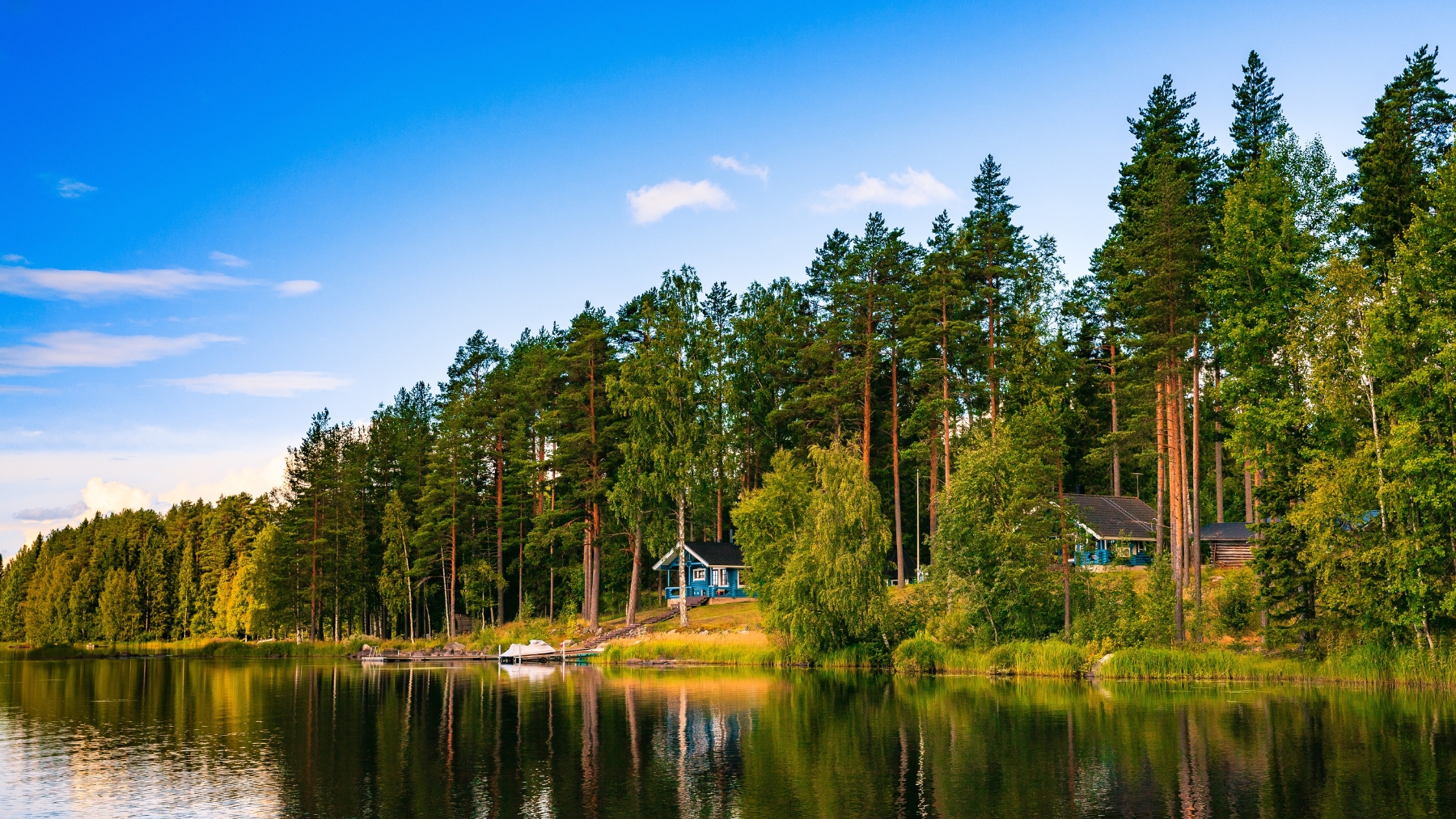
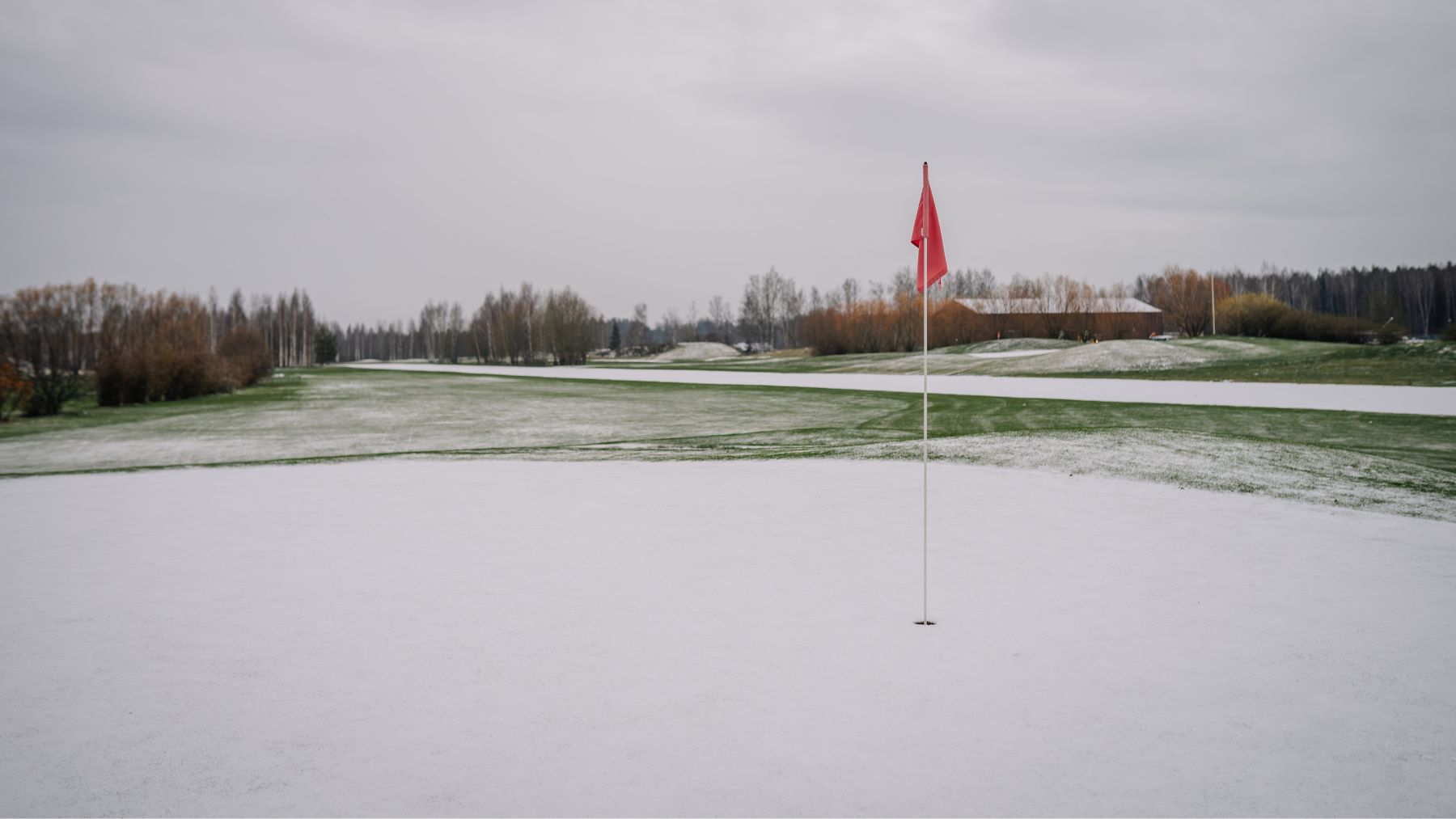
Åland does not immediately present itself as a headline golf location. The landscape is more exposed than parts of mainland Sweden, with stretches of coastline, rock, and open ground that can feel raw and, at times, almost bleak, particularly when the weather turns. It is not dramatic in the same way as Norway, nor as polished as parts of southern Sweden, but it has a character that becomes clearer the more time you spend in it. Within that setting sits a level of golf that sits higher than first impressions suggest, and it is this contrast that gives the islands their appeal.
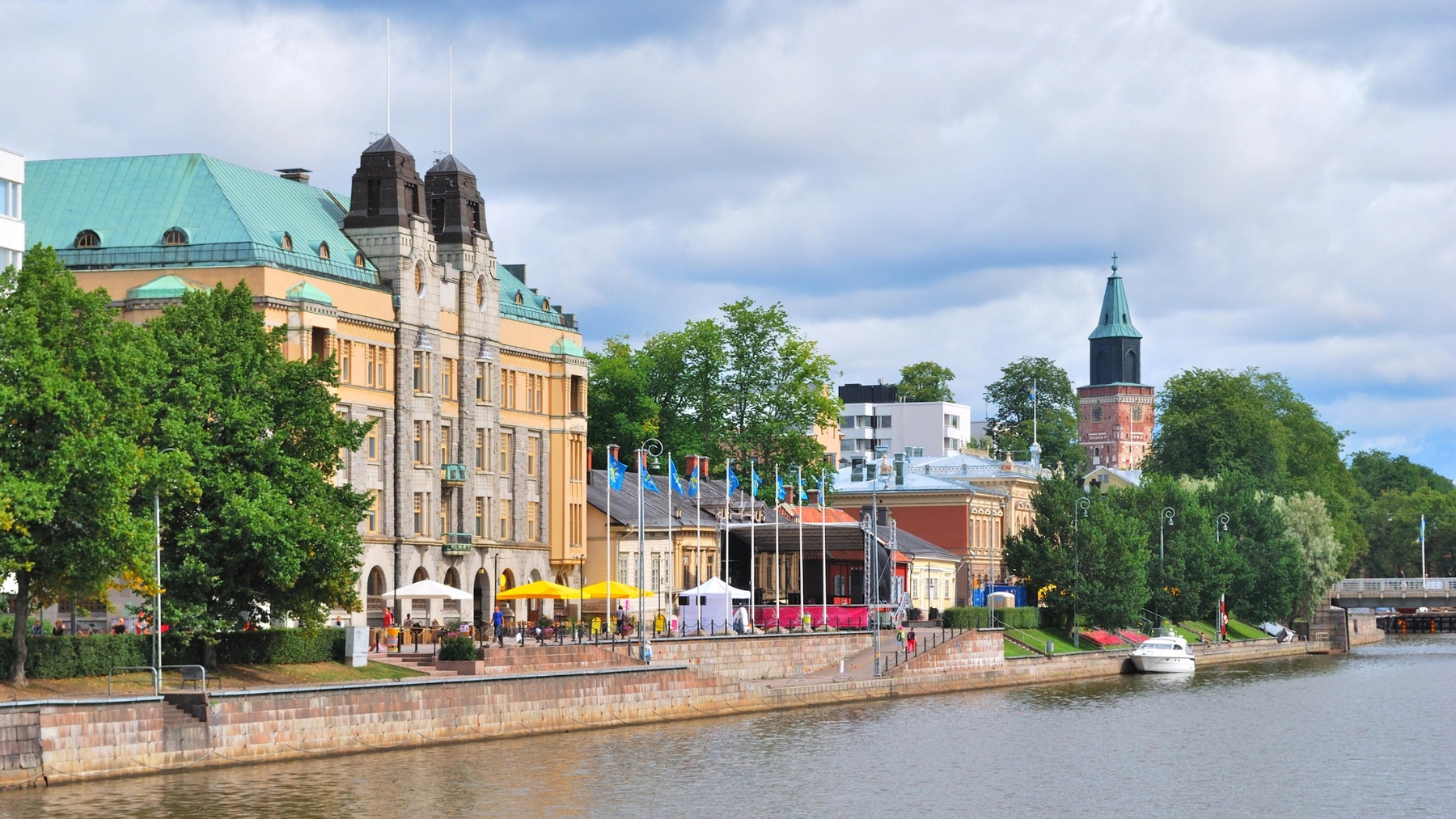
Access is straightforward. Regular ferry routes connect Åland to both Stockholm and Turku, and once you arrive, moving around is simple. Distances are short, traffic is minimal, and the trip tends to fall into place without needing much adjustment. It is a destination that works quietly, but effectively, and one where the focus naturally settles on the golf rather than the logistics around it.
Golf Around Åland
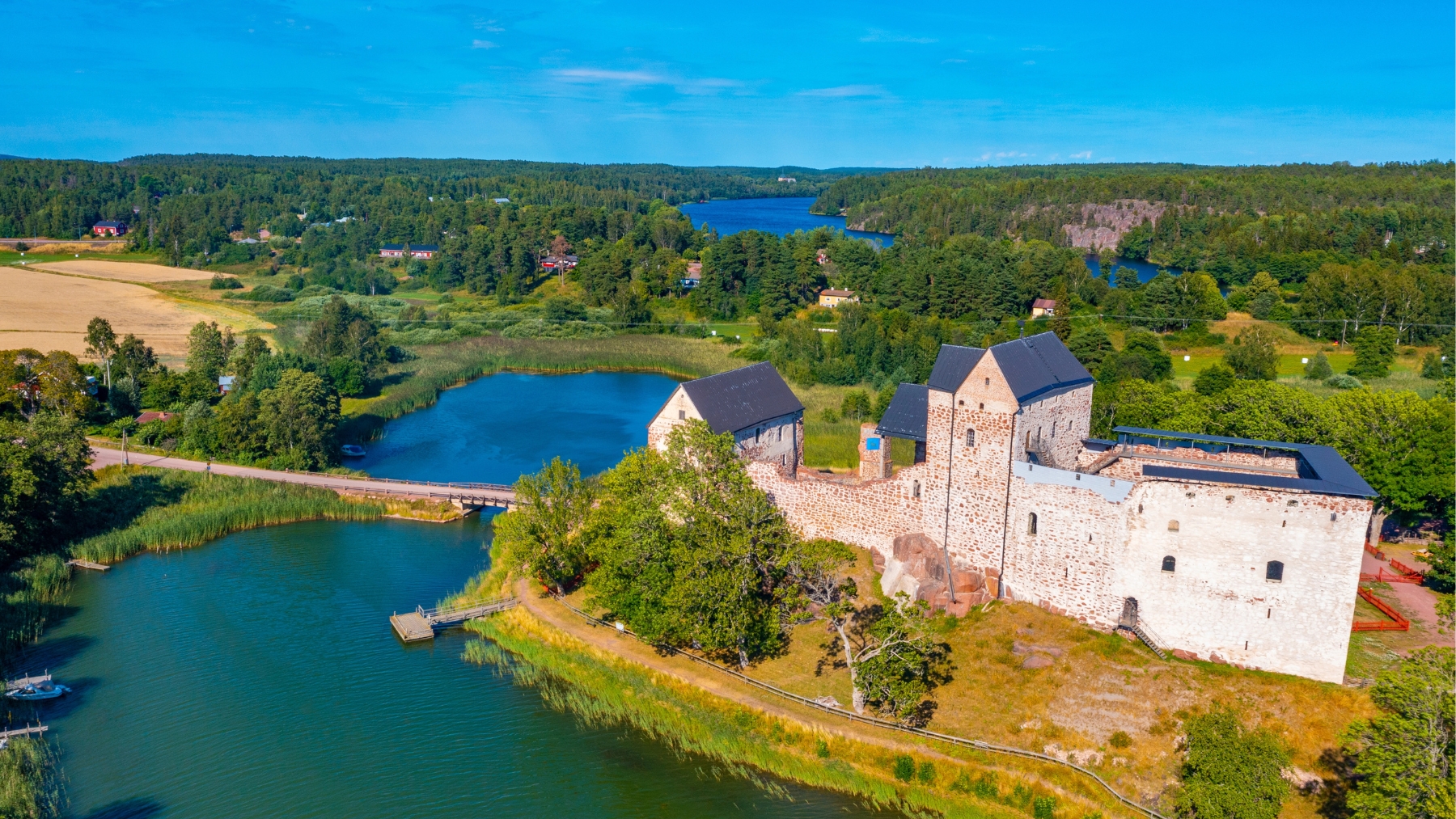
Golf on Åland centres around Ålands Golfklubb, just outside Mariehamn, where the majority of the island’s golf is played. With two full courses on site, it creates a natural base for the trip, allowing you to settle in rather than move around. It is a simple structure, but one that works well given the scale of the islands. This is, first and foremost, a trip for Slottsbanan. Consistently ranked among the best courses in Finland, it is a layout that justifies the journey on its own. The course is shaped by its setting, moving between more enclosed inland holes and stretches that open out towards the water, with Kastelholm Castle sitting quietly within the landscape rather than dominating it, and with views of the Baltic present throughout the round.
From the tee, there is generally space, but positioning remains important. Fairways are not overly tight, yet angles into the greens quickly dictate how each hole should be played. The land moves subtly throughout, and while there are no extreme changes in elevation, there is enough variation to keep the round from ever feeling flat. The challenge builds through approach play, where distance control and placement become more important than length alone. Holes 9 and 10 are a good example of how the course works, running parallel to the bay and offering optional carries across the water that reward precision with better angles into the green. The greens themselves are a defining feature, sitting naturally within the terrain, varied in shape and well protected without feeling forced. Miss in the wrong areas and recovery requires thought rather than simply execution, and it is a course that rewards consistency across the round while becoming more interesting the more you play it.
Wind is present, particularly on the more open stretches, but it is rarely the dominant feature. Instead, it adds another layer to the decision-making without overwhelming the design, and that balance is part of what makes Slottsbanan so effective. Alongside it, Kungsbanan provides a useful contrast. Slightly shorter and more contained, it moves through more enclosed terrain and offers a more relaxed feel from the tee, while still placing emphasis on control around the greens. Away from the main complex, Eckerö Golf adds a different perspective, set on flatter ground to the west of the islands and providing a more straightforward but still enjoyable round.
Taken together, golf on Åland is not about variety in the traditional sense, but about how easily everything fits together. Slottsbanan is the reason to come, and the supporting courses are what make the trip worthwhile over a few days. Distances are short, the structure is simple, and once you are there, it is easy to settle into a rhythm that feels natural rather than planned.
Where To Stay
Where you stay on Åland is more straightforward than most destinations, largely because of how the golf is set up. With Ålands Golfklubb sitting just outside Mariehamn and offering 36 holes on site, there is a strong case for keeping everything centred around that area. It allows you to settle into the trip, minimise travel, and structure your days around the golf without needing to think too much about logistics.
Staying close to the golf works particularly well if that is the focus. Kastelholms Gästhem sits just a few minutes from the courses and provides a simple, well-run base that fits naturally with the setting. Nearby, Hotel & Restaurant Kastelholm offers something slightly more refined while still keeping you close to both Slottsbanan and Kungsbanan. Both options make early starts and multiple rounds easy, and keep you close to the landscape that defines the golf.
At the same time, Mariehamn provides a different balance. While small, it offers enough in the evenings to give the trip some variety. Hotel Pommern is one of the more reliable options, centrally located and easy to work around, while Hotel Arkipelag sits closer to the water and offers a slightly more relaxed feel. From either, you are only around 15–20 minutes from the golf, which keeps the structure simple while adding a bit more life to the evenings.
For groups or longer stays, Airbnb works particularly well on Åland. Renting a house either around Mariehamn or closer to Kastelholm allows you to move easily between the two while settling into a more relaxed rhythm. Given the short distances involved, you are never far from either option, and it becomes more about how you want the trip to feel than any practical limitation.
As with the rest of the islands, there is no need to overcomplicate things. The choices are limited but good, the distances are short, and whichever option you take, the trip tends to fall into place without much effort.
Out and About in Åland
Time away from the course on Åland tends to settle into a slower rhythm, and much of what you do sits naturally around Mariehamn. The town itself is small and easy to move through, with a harbour that becomes the focal point, particularly in the evenings. It is not busy or overstated, but it works, with a handful of restaurants and cafés that give enough structure to the day without ever feeling like a destination in its own right. Places like Nautical offer a slightly more refined option close to the water, while Indigo Restaurant & Bar provides something more relaxed and consistent, and it is straightforward to find somewhere that fits without needing to plan too far ahead.
Beyond Mariehamn, the islands open up quickly. Short drives take you into quieter areas where the coastline, forest, and open ground shape the experience more than anything else, and much of the appeal comes from that simplicity rather than from any single destination. The area around Kastelholm, close to the golf, is one of the more interesting parts of the islands, with Kastelholm Castle and the surrounding landscape adding context to the time between rounds without needing to become the focus. For something even more low-key, simply following the coastal roads or stopping along the water tends to be enough, and the scale of Åland means that nothing ever feels far away.
As with the golf, there is no need to overcomplicate things. Åland works best when you keep it simple, allowing the rhythm of the trip to build around the rounds rather than trying to fill the gaps between them.
Trip Logistics
A trip to Åland is slightly different to most Nordic destinations, largely because of how you arrive. For most, the ferry is the natural option, and it is part of the experience rather than just a means of transport. Regular services run from Stockholm and Turku Port, operated primarily by Viking Line and Tallink Silja Line. Crossings from Stockholm typically take around five to six hours, while routes from Turku are slightly shorter, and in both cases the journey is straightforward, comfortable, and easy to build into the structure of the trip. Flights into Mariehamn Airport are also available, mainly from Helsinki and Stockholm, and provide a more flexible and often more financially viable option, particularly for shorter stays. However, the ferry tends to be the better choice if you want to bring a car, which makes a noticeable difference once on the islands.
Having a car is strongly recommended. Distances are short, but public transport is limited, and moving between Ålands Golfklubb, Eckerö Golf, and your accommodation is far easier with your own transport. The roads are quiet and easy to navigate, and driving never feels like a burden within the trip. In terms of structure, two to three days works well, with Slottsbanan naturally taking priority. It is worth allowing enough time to play it more than once if possible, with Kungsbanan and Eckerö fitting around that depending on how much golf you want to play, without needing to stretch the schedule.
Golf packages are widely available on Åland, and they are often the simplest way to organise the trip. Combinations of ferry travel, accommodation, and tee times at Ålands Golfklubb are easy to book and remove much of the planning, particularly for shorter stays, while also representing good value given how compact and self-contained the destination is. As with the rest of Åland, the logistics are not complicated, but they do benefit from being thought through in advance. Once you are on the islands, everything becomes easy, and the trip settles into a rhythm that requires very little adjustment.
Final Thoughts
Åland is not a destination built around scale. It does not offer a long list of courses or the depth of some of the larger Nordic regions, but that is not where its strength lies. Instead, it provides a more focused experience, built around one course that is genuinely worth the journey, supported by just enough to make a short trip feel complete.
At the centre of that sits Slottsbanan. It is a course that holds its place among the best in Finland, and one that justifies the effort required to get to the islands. Around it, the rest of Åland adds balance rather than distraction, allowing you to build a few days of golf that feel simple, coherent, and easy to manage.
It also fits naturally into a wider trip. If you are spending time in Stockholm, a couple of days on Åland is enough to experience both Slottsbanan and Kungsbanan, adding something slightly different without complicating the overall plan.
For those looking for something less obvious, Åland offers a strong alternative to the more established Nordic destinations. It works particularly well for a shorter trip, where the combination of straightforward logistics, high-quality golf, and a setting that never feels overdone creates something that is both relaxed and quietly effective.